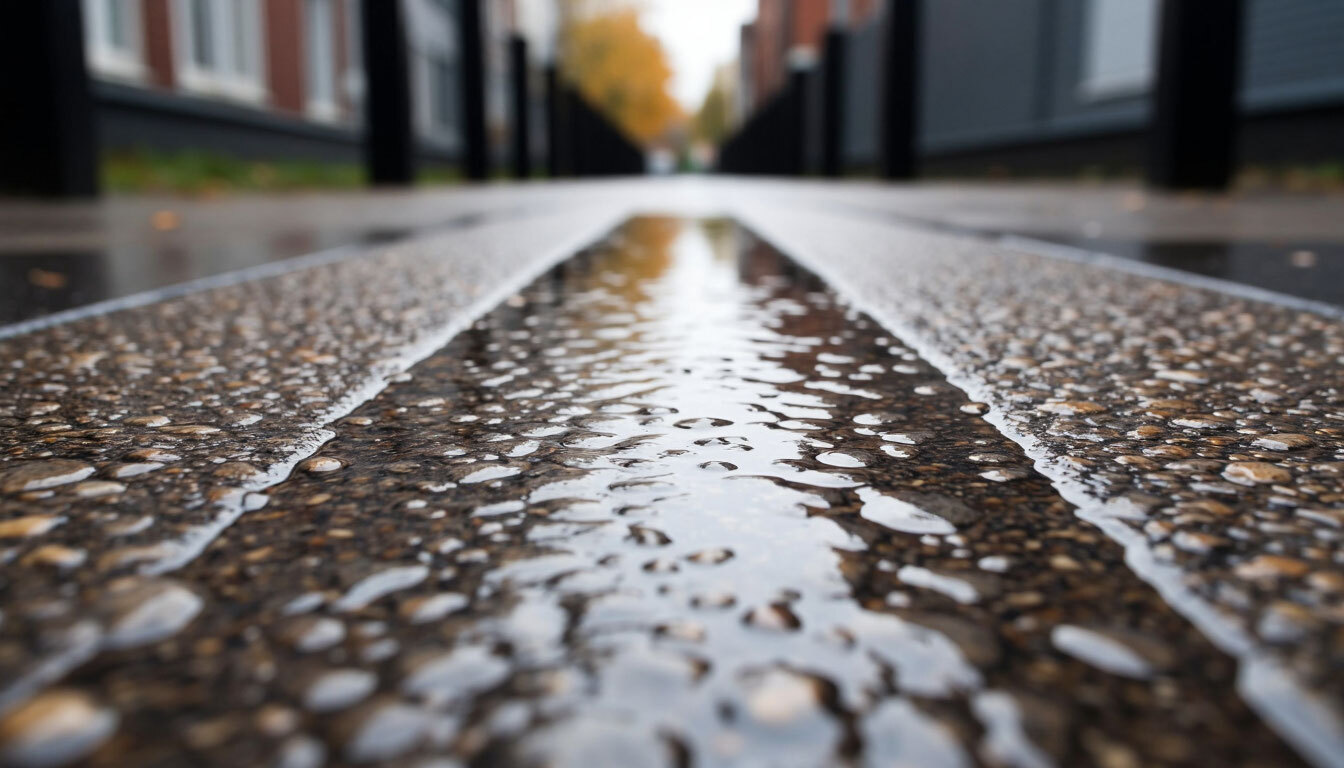
In the context of rapid urbanization and changing weather patterns in the United Arab Emirates, traditional approaches to surface design face fundamentally new challenges. The intense, though infrequent, rainfall characteristic of the region places significant strain on urban infrastructure, requiring a rethinking of the very concept of "paving." It is here that permeable resin bound technologies come to the forefront, offering not just an aesthetic solution but a comprehensive water management system integrated directly into the surfaces of roads, pedestrian areas, and public spaces.
The hydrological challenge of the UAE urban environment
The problem of surface runoff in urbanized areas of the UAE has particular relevance. Traditional impermeable surfaces — asphalt, concrete, tiles — create a sealed barrier between rainfall and the natural soil. During heavy rains, which have become increasingly intense in recent years, these surfaces generate massive volumes of runoff, overloading storm drains and creating risks of local flooding. Sudden water flows cannot be absorbed by the ground, carrying surface pollutants directly into the ecosystem.
The situation is exacerbated by the characteristics of local soils, which have limited absorption capacity due to high sand and clay content. This creates a paradoxical situation: on one hand, water cannot penetrate artificial surfaces, while on the other, natural soil is also unprepared to accept large volumes of moisture. Permeable resin bound surfacing offers a third way — a technology that not only allows water to pass through but incorporates mechanisms for its filtration and temporary retention, significantly reducing peak load on drainage systems.
How permeable resin bound systems work
The fundamental difference between permeable resin bound surfacing and its impermeable counterparts lies in the material's structure. While conventional surfaces are designed for maximum density and waterproofing, permeable systems deliberately create an open porous structure. This is achieved through specially calculated granulometric composition of stone aggregate, where particles are selected to maintain micro-spaces between them even after complete resin curing.
The process of water passing through such surfacing represents a multi-stage natural filtration system. Initially, water reaches the surface and immediately percolates downward without forming puddles or streams. As it moves through the surfacing layer, suspended dirt particles, microorganisms, and light contaminants are trapped in the porous structure. The resin matrix itself, possessing certain adsorption properties, can retain some petroleum products and heavy metals that may be present in surface runoff.
A key feature of the technology is its ability to integrate with existing drainage systems. Unlike so-called "permeable resin bonded gravel," where a stone layer applied to a solid base provides only surface drainage, genuine permeable resin bound systems represent a full-fledged structural layer working in tandem with a base designed for infiltration or directed discharge of treated water.
Comparative analysis: resin bound versus alternative solutions
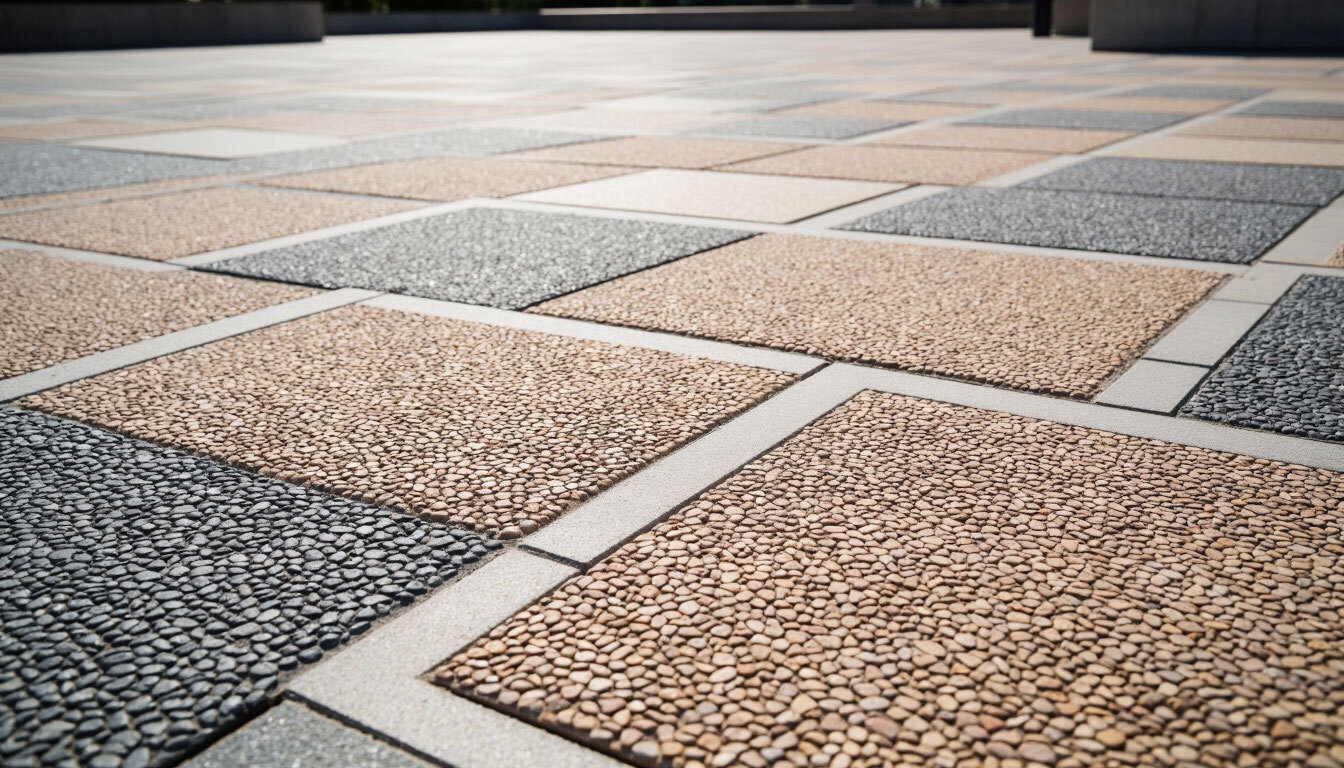
Various solutions claiming permeable properties exist on the market, but their effectiveness and durability differ significantly. "Permeable resin bonded gravel" technology, despite the similar name, has fundamental differences. In this case, permeability is provided solely by spaces between gravel particles that are merely glued to a solid impermeable base. Such systems are prone to rapid clogging, lose drainage properties over time, and do not provide structural integrity.
Genuine permeable resin bound surfacing represents a monolithic system where both resin and stone work as a unified whole to ensure durable permeability. Open porosity is maintained throughout the service life, which exceeds 25 years with proper installation. The system can withstand intensive pedestrian traffic and even limited vehicular traffic without losing drainage properties, making it a universal solution for various types of urban spaces.
Another advantage is thermal stability. Under extreme UAE temperatures, permeable surfaces demonstrate better heat absorption indicators. Water evaporation from lower layers of the surfacing creates a natural cooling effect, reducing surface temperature by 5-7°C compared to traditional asphalt on a hot day. This not only enhances pedestrian comfort but also reduces the "heat island" effect in urbanized areas.
Practical applications in UAE conditions
The unique properties of permeable resin bound surfaces open broad opportunities for their application in various project types. In private residences, they are ideal for patio areas, driveways, and pedestrian walkways, where they provide immediate drainage after plant watering or rare rains, keeping surfaces dry and safe.
In commercial and public projects — hotels, business centers, municipal parks — these surfaces solve both aesthetic and infrastructure tasks simultaneously. They enable the creation of extensive paved areas without complex surface drainage systems, integrating stormwater management directly into landscape design. These solutions are particularly valuable for projects seeking environmental certifications such as LEED or BREEAM, where stormwater management is an important evaluation criterion.
For specialized applications — such as areas around swimming pools, spa zones, and water parks — permeable surfaces ensure safety by instantly removing water from the surface and preventing slippery areas. Unlike traditional tiles, which become extremely hazardous when wet, resin bound surfaces maintain anti-slip properties even under constant water contact.
Performance characteristics and durability
A common misconception about permeable surfaces is the assumption of their tendency to clog and reduced efficiency over time. Quality resin bound systems demonstrate remarkable resistance to this phenomenon thanks to self-cleaning properties. During each rainfall, water movement through the pores flushes out accumulated fine particles, maintaining constant permeability. Maintaining such surfaces requires only periodic pressure washing, which fully restores drainage properties.
The strength of permeable resin bound surfacing is comparable to traditional impermeable analogs. It successfully withstands intensive pedestrian traffic, service vehicle movement, and even limited passenger car traffic. Material flexibility allows it to adapt to minor base movements without crack formation, which is particularly important in the sandy soil conditions of the UAE.
From the perspective of long-term economic efficiency, permeable systems demonstrate significant advantages. They reduce or completely eliminate the need for complex surface drainage systems, lowering construction capital costs. Reducing the volume of runoff directed to storm drains decreases drainage fees in commercial projects. These factors, combined with the exceptional durability of the surfacing itself, ensure significantly lower total cost of ownership compared to traditional solutions.
Integration into sustainable urban development in the UAE
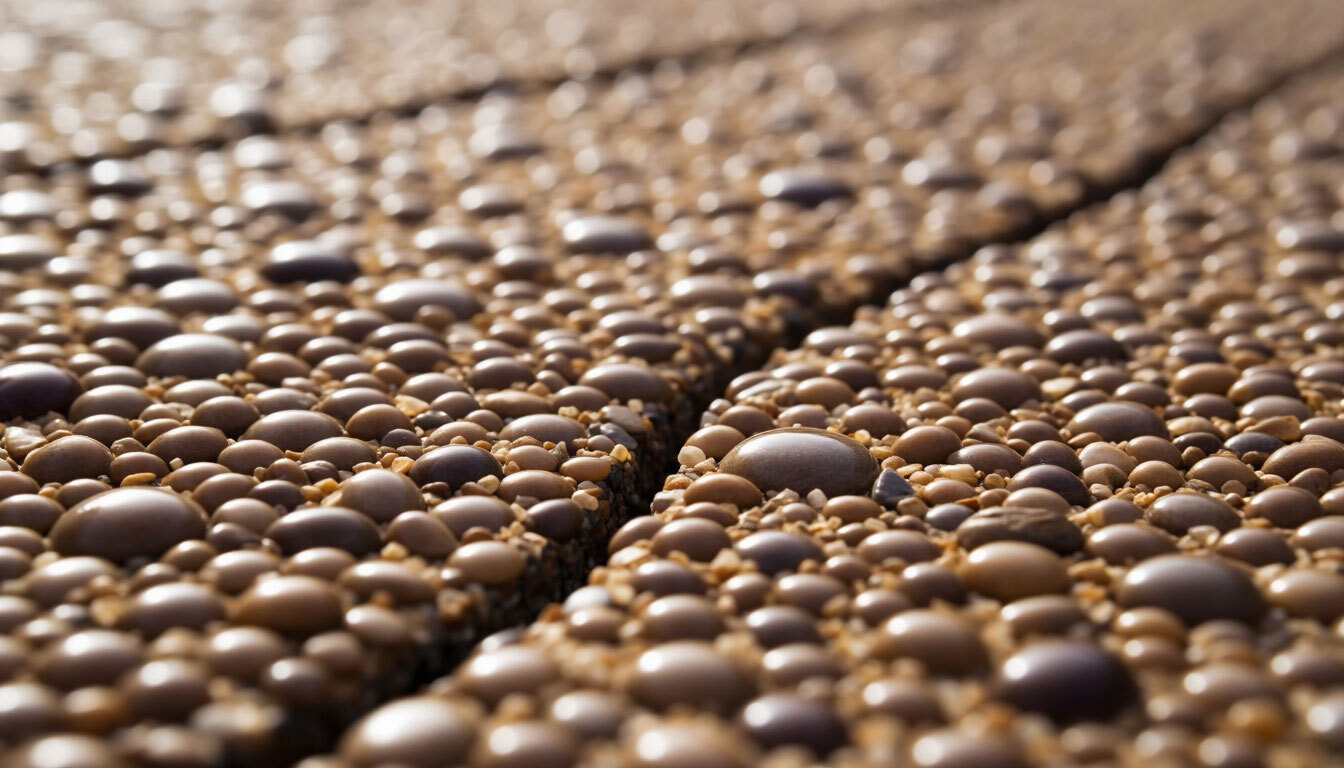
Adoption of permeable resin bound technologies fully aligns with sustainability strategies implemented in the Emirates. These systems contribute to achieving multiple goals simultaneously — from water resource management to reducing urban heat load. They represent an example of green infrastructure that integrates natural processes into the urban environment, creating a more balanced and sustainable ecosystem.
In the context of smart city initiatives such as Dubai Smart City, permeable surfaces offer not only environmental but technological advantages. They can serve as a foundation for integrating data collection systems on rainfall quantity and quality, soil condition monitoring, and other environmental parameters. This transforms ordinary surfaces into elements of intelligent urban infrastructure capable of providing valuable information for optimizing municipal management.
Technology development prospects in the region
The future of permeable surfacing in the UAE appears extremely promising. With growing awareness of stormwater management issues and tightening environmental standards, demand for such solutions will only increase. Developments in new resin types with enhanced UV resistance and ability to biologically degrade certain pollutants open additional opportunities for creating truly eco-friendly urban surfaces.
The unique climatic conditions of the UAE create an ideal testing ground for implementing and refining these technologies. Local manufacturers and service providers have the opportunity not just to import ready-made solutions but to adapt them to regional specific requirements, creating products optimally suited for Middle Eastern conditions. This opens prospects for establishing the UAE as a center of excellence in innovative solutions for urban environments.
Ready to consider permeable resin bound surfacing as a comprehensive solution for your next project? Our team is prepared to provide detailed analysis of this technology's application possibilities considering your site specifics and stormwater management requirements.