Modern landscaping with cutting-edge technologies represents an investment in functionality, aesthetics, and durability of your property. Companies specializing in hardscaping offer a wide range of solutions: from paving driveways and pedestrian zones to soil protection on infrastructure projects. In the climate conditions of the United Arab Emirates, where extreme temperatures and intense rainfall create special requirements for materials, choosing a professional contractor becomes the decisive factor for project success.
According to market research data on the UAE landscape design market, the hardscaping segment demonstrates annual growth of 12–15%, driven by active construction of residential complexes, resort facilities, and transport infrastructure. Under such conditions, what matters most is not just quality of work execution, but a comprehensive approach: from design and material selection to post-warranty maintenance. Professional hardscaping companies in the UAE work with innovative technologies such as resin bound aggregate surfaces (Resin Bound Surface), which provide a combination of strength, water permeability, and flawless aesthetics
According to market research data on the UAE landscape design market, the hardscaping segment demonstrates annual growth of 12–15%, driven by active construction of residential complexes, resort facilities, and transport infrastructure. Under such conditions, what matters most is not just quality of work execution, but a comprehensive approach: from design and material selection to post-warranty maintenance. Professional hardscaping companies in the UAE work with innovative technologies such as resin bound aggregate surfaces (Resin Bound Surface), which provide a combination of strength, water permeability, and flawless aesthetics
1. What is Hardscaping: Key Directions and Technologies
Hardscaping is a comprehensive set of works for creating solid surfaces and structures on open territories. Unlike softscaping, which focuses on greenery and vegetation, hardscaping covers all non-metal and non-plant components of landscape design. Professional hardscaping companies in the UAE provide services for facilities of various scales: from private villas and commercial complexes to national-scale infrastructure projects.
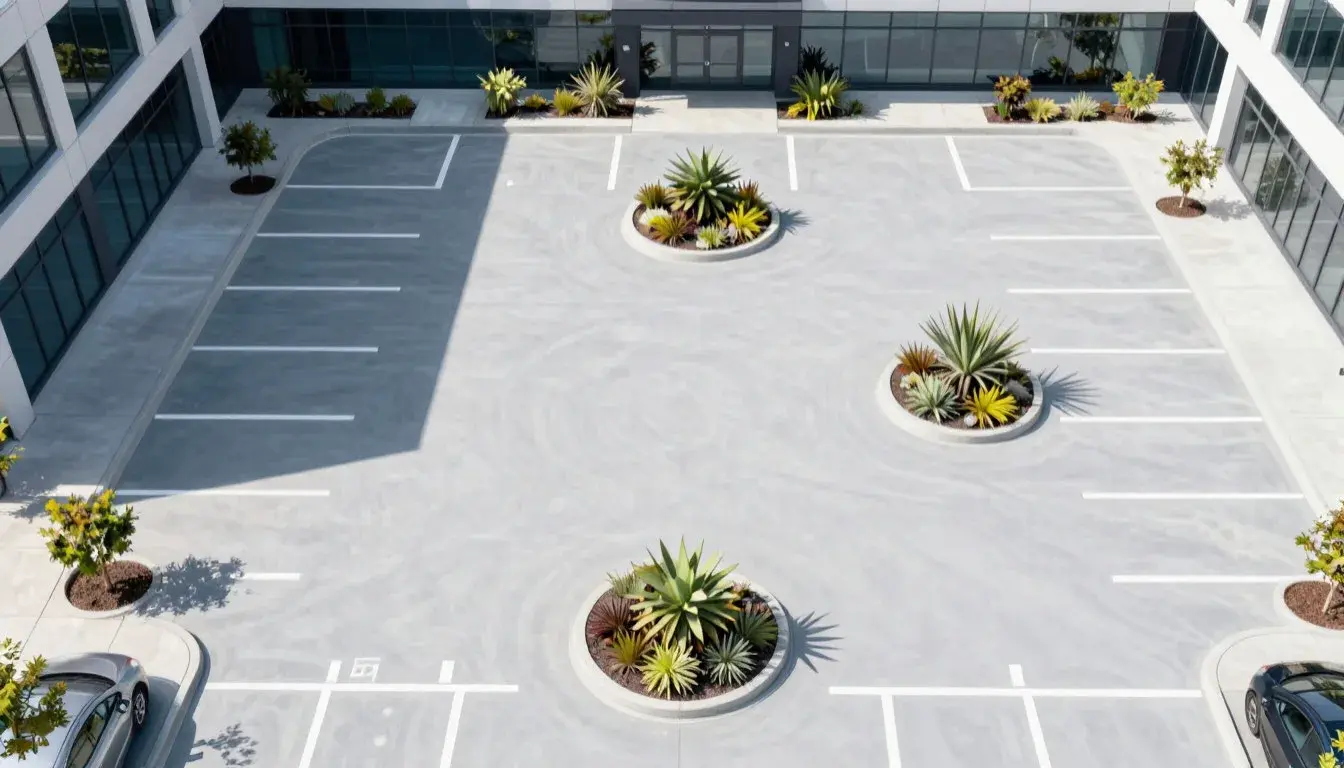
The main areas of hardscaping companies include driveway and courtyard surfacing using durable materials resistant to high loads and climatic impacts. Paving pedestrian zones, parking lots, and stands requires specialized solutions ensuring safe movement and ease of operation. Particular importance is given to creating water-permeable surfaces that solve the stormwater runoff problem — relevant for a region with unpredictable precipitation.
Infrastructure projects constitute a significant share of professional companies' order portfolios. Protection of highway slopes, railway embankments, coastlines, and river channels requires engineering solutions ensuring soil stability with minimal visual impact on the landscape. Modern technologies such as Resin Bound Surface allow creating surfaces that simultaneously perform a reinforcing function and preserve the natural appearance of the territory.
1.1. Resin Bound Surface Technology: Operating Principle and Applications
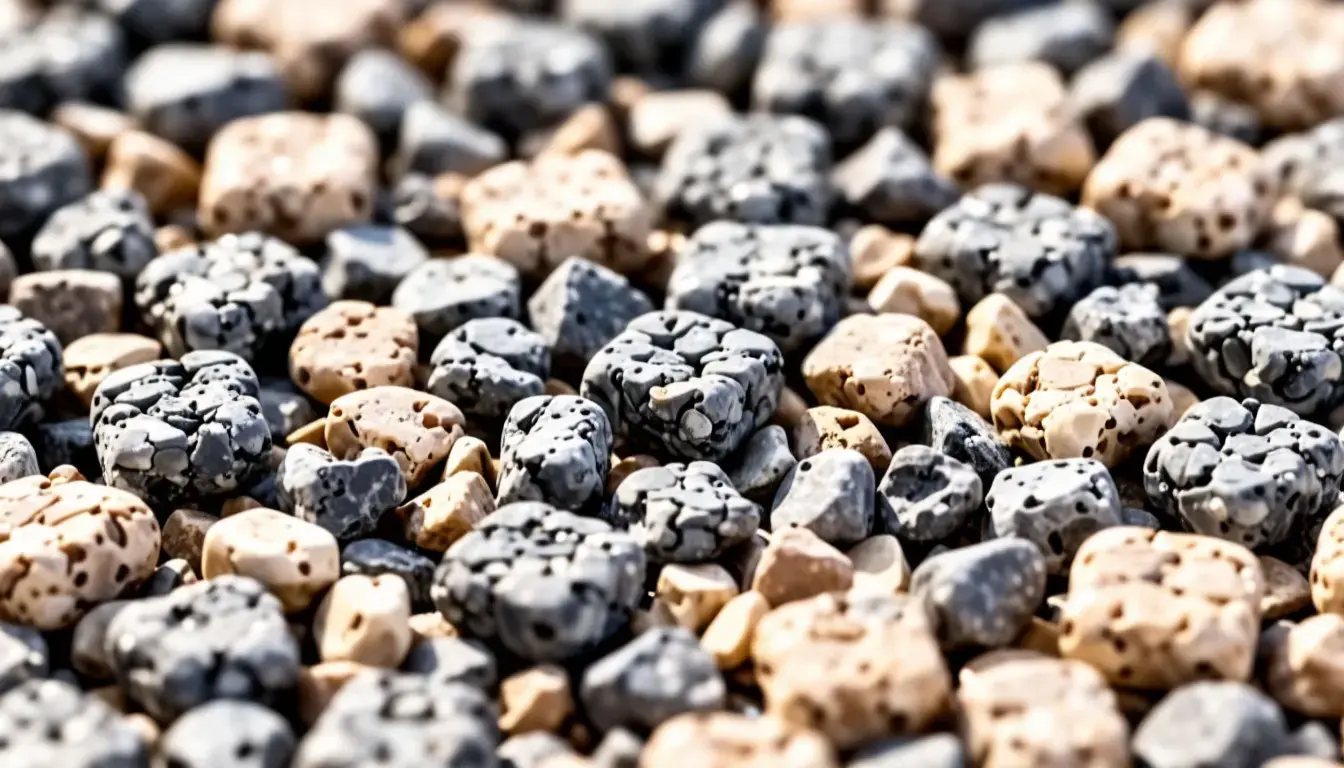
Resin Bound Surface technology is based on using high-quality polyurethane resin mixed with natural aggregate — granite, marble chips, or gravel. The resulting mixture is applied to a prepared base, forming a monolithic, seamless surface with unique operational characteristics. Unlike traditional paving methods, this technology provides 100% water permeability of the surface, preventing puddles and extending the service life of the coating.
Material compressive strength is 8–10 MPa, allowing it to withstand significant loads from vehicles and pedestrian traffic. At the same time, flexural strength exceeds 1 MPa, ensuring resistance to temperature deformations. Operating temperature range from -80°C to +100°C guarantees surface stability under UAE desert climate conditions, where air temperature in summer reaches 45–50°C, and ground surface can heat up to 70°C or more.
Environmental safety of polyurethane resin is confirmed by international certificates. The material does not emit harmful substances, is resistant to ultraviolet radiation, and does not require special disposal measures. Warranty period for coatings made by professional companies is 5 years or more, demonstrating manufacturers' confidence in their products' durability.
2. Criteria for Choosing a Hardscaping Company in the UAE
Choosing a contractor for landscape work is a responsible decision that determines the quality and durability of the result. When evaluating hardscaping companies, it is recommended to consider several key factors allowing objective comparison of potential partners and making a well-founded decision.
2.1. Portfolio and Experience in Project Implementation
Portfolio of completed works is the first and most informative evaluation criterion. Professional hardscaping companies publish photos and descriptions of implemented projects on their websites with breakdown by categories: private projects (villas, residences), commercial facilities (hotels, shopping centers, office complexes), infrastructure works (slope protection, water channel arrangement). A diverse portfolio indicates the contractor's ability to work with various facility types and project scales.
Experience working in UAE climate conditions is critically important. Technologies and materials that show excellent results in moderate European climates may not meet the requirements of the desert region. Companies with local experience account for soil specifics, solar radiation intensity, precipitation patterns, and other factors during design and execution. The minimum recommended experience in the UAE market is 3–5 years.
Client and partner reviews complement portfolio information. Professional companies collect and publish customer feedback, allowing evaluation of communication quality, schedule adherence, and professionalism in work execution. Special attention should be given to reviews about long-term surface operation — 1–2 years after facility acceptance.
2.2. Technical Equipment and Production Capacity
Resin Bound Surface technology requires specialized equipment for mixture preparation and surface application. Professional companies have their own production facilities, ensuring quality control at all stages — from component preparation to final surface treatment. Mixture preparation is carried out under controlled conditions with precise adherence to proportions, guaranteeing stable surface characteristics.
The application process includes several sequential stages: base preparation (ground leveling, compaction, engineering layers installation), mixture application with temperature-humidity regime compliance, final treatment and quality control. Companies with well-developed technical base can execute works on facilities ranging from several tens to several thousand square meters within tight deadlines.
Having their own laboratory or partnerships with certified testing centers allows conducting material verification and monitoring finished products' compliance with technical specifications. This is especially important for infrastructure projects where results may be subject to independent examination.
2.3. Certification and Standards Compliance
Hardscaping companies operating in the UAE market must comply with local legislation requirements and international standards. ISO 9001 certification (quality management system) confirms the presence of documented processes and quality control procedures. ISO 14001 certification (environmental management system) indicates a responsible approach to environmental protection.
For infrastructure projects, compliance with road construction standards and municipal regulatory documents may be required. Professional companies have necessary licenses and permits for work execution, as well as liability insurance protecting clients from potential risks.
Additional qualification confirmation is participation in professional associations and industry unions. Membership in UAE landscape design and construction associations indicates the company's commitment to industry standards and continuous professional development.
3. Factors Affecting Landscaping Project Costs
Understanding the cost structure and factors determining project budget helps clients plan investments and compare offers from various contractors. Hardscaping project costs depend on several key parameters.
Surface area is the basic factor: most contractors apply discount systems when work volume increases. Economies of scale allow reducing per-square-meter cost for large-scale project implementation.
Type of materials used significantly affects budget. Natural granite and premium-quality marble chip aggregate costs more than standard mixes. Colored and decorative aggregate variants also increase cost. However, choosing higher-quality materials ensures better durability and aesthetics of the coating.
Base preparation complexity depends on existing surface condition. Demolition of old coating, terrain leveling, drainage system installation — all these works increase total estimate. Facilities with problematic soils or complex configuration require additional engineering solutions.
Transport accessibility and logistics affect delivery cost of materials and equipment. Remote facilities or territories with limited access may require additional logistics expenses.
Execution timelines play a role for urgent projects. Accelerated work schedules require additional personnel and may increase cost. Optimal planning at the design stage helps avoid urgency surcharges.
3.1. Typical Project Budget Structure
A typical landscaping project includes several main expense items. Base preparation constitutes 15–25% of the budget and includes ground leveling, compaction, and sand-gravel cushion installation. Base materials (geotextile, sand, crushed stone) are purchased from certified suppliers.
Resin Bound Surface coating (materials and works) forms the main part of the budget — 60–75%. This item includes polyurethane resin, aggregate of selected fraction and color, as well as works on mixture preparation and surface application.
Additional works (final treatment, marking, curb installation) constitute 5–15% of the budget depending on project requirements.
4. Project Implementation Process: From Consultation to Facility Handover
Professional hardscaping companies follow a structured approach to project implementation, ensuring predictable results and minimizing risks. The typical process includes several sequential stages, each with its own goals and evaluation criteria.
Stage 1. Consultation and Facility Inspection. Initial meeting includes site visit by a specialist, discussion of client requirements and wishes, examination of existing conditions. Technical assignment is drafted and preliminary work volume assessment is prepared. Consultation is usually provided free of charge.
Stage 2. Design and Solution Development. Based on the technical assignment, design documentation is developed: base diagram, material specifications, surface application plan. For complex facilities, 3D visualizations are created allowing the client to evaluate the future result. Project approval serves as the basis for preparing a commercial proposal.
Stage 3. Base Preparation. A critically important stage determining coating durability. Includes surface leveling, ground compaction, sand-gravel cushion installation, geotextile mounting. Preparation quality is checked using specialized instruments (densimeters, levels).
Stage 4. Mixture Preparation. Components (resin and aggregate) are dosed with accuracy to the gram according to the recipe. Material and ambient temperature is controlled — optimal range is 15–30°C. Preparation is carried out immediately before application, as the mixture has limited pot life.
Stage 5. Surface Application. Mixture application is done manually or using specialized equipment. Layer thickness is controlled at each section. Special attention is given to joints and junctions with existing structures. Works are not conducted under unfavorable weather conditions (rain, extreme heat, strong wind).
Stage 6. Final Treatment and Quality Control. After surface setting, flatness is checked, defects are absent, and color compliance is verified. If necessary, additional grinding or protective compound application is performed.
Stage 7. Facility Handover and Warranty Maintenance. Client acceptance of work is accompanied by warranty documentation transfer and care recommendations. Professional companies provide 5-year or more warranty with commitment to remedy defects identified during the operation period.
5. Technical Maintenance and Extending Coating Service Life
Resin Bound Surface coatings have minimal maintenance requirements, however following recommendations allows significantly extending service life. With proper care, coating service life can reach 20–25 years without substantial loss of operational and aesthetic characteristics.
Regular surface cleaning is performed using water and soft brushes. For removing stubborn dirt, household detergents are allowed. Use of high-pressure washers is possible, however pressure should not exceed 100 bar to avoid surface damage.
Preventive surface inspection is recommended twice a year: before summer season and before rainy season. During inspection, surface integrity is checked, cracks and bulges are absent, condition of junctions with curbs and structures is assessed. Identified defects are remedied promptly, preventing damage propagation.
In high-traffic zones (parking lots, driveways), protective coating application every 3–5 years is recommended. The procedure refreshes the protective layer and brightens surface color. Treatment cost is substantially lower than full coating replacement expenses, making prevention economically justified.
6. Why Choose RBS Group: Advantages of Collaboration
Among many hardscaping companies in the UAE, RBS Group stands out with a comprehensive approach and deep expertise in Resin Bound Surface technology. Founded in 2018, the company has implemented over 500 projects of various scales — from private villas to nationally significant infrastructure facilities. RBS Group portfolio includes works for leading Dubai hotels, Abu Dhabi residential complexes, Sharjah transport arteries, and public spaces throughout the region.
Key advantages of working with RBS Group: own material production controlling quality at every stage; team of certified specialists with experience in UAE climate conditions; comprehensive project support from consultation to warranty maintenance; flexible collaboration terms and individual approach to each client.
The company has an office in Business Bay (Dubai) and implements projects in all UAE emirates. To discuss your project, contact RBS Group managers by phone +971 4 587 7086, write to sales@rbsgroup.ae, or submit a request through the form on the website.
Conclusion
Choosing a hardscaping company in the UAE determines the quality and durability of landscaping results. Professional contractors offer comprehensive solutions: from design to post-warranty maintenance. Resin Bound Surface technology has proven to be the optimal choice for the region's climate conditions, providing a combination of functionality, aesthetics, and durability.
When choosing a contractor, it is recommended to evaluate portfolio of implemented projects, technical equipment, certifications, and warranty maintenance terms. Key factors affecting project budget are surface area, material types, base preparation complexity, and execution timelines.