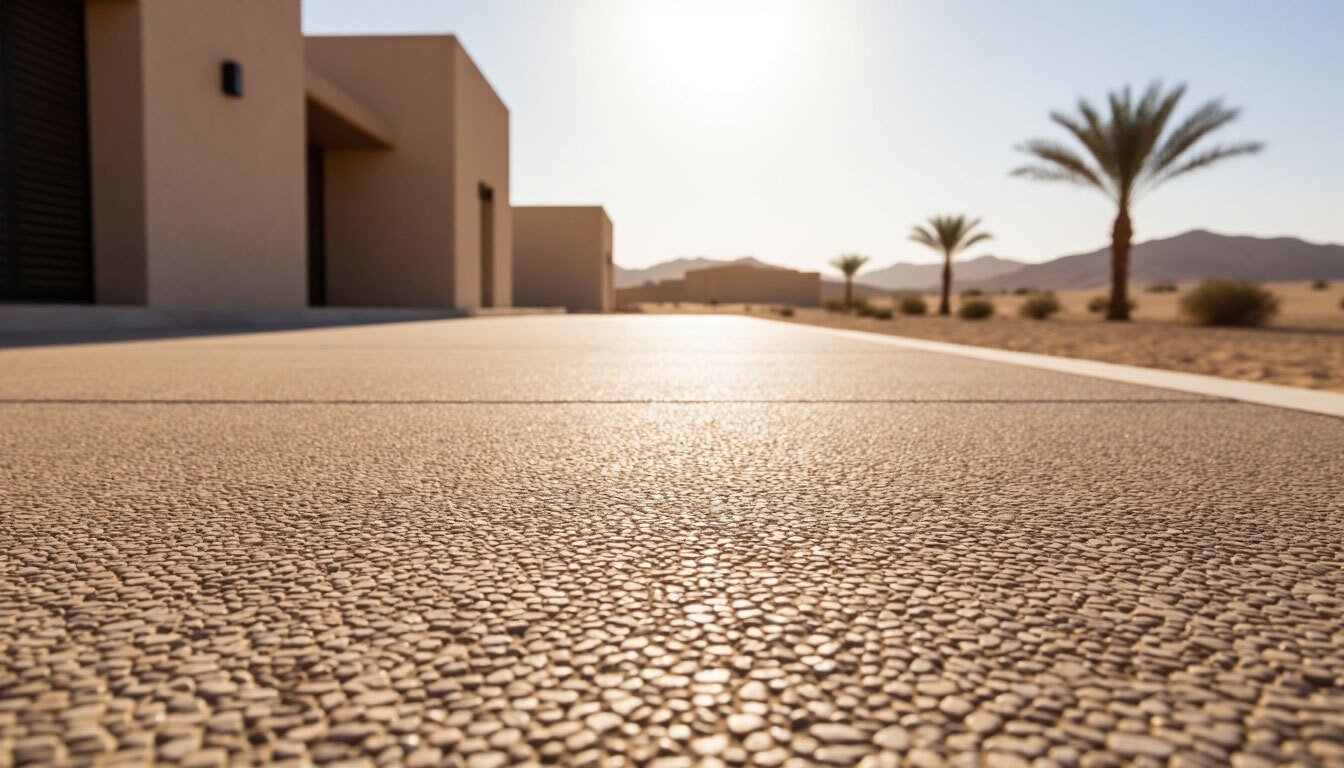
Modern requirements for surfaces in public and private spaces in the United Arab Emirates have radically changed over the past decade. Traditional asphalt and concrete solutions, despite their prevalence, increasingly show shortcomings under the region's extreme climate conditions. Against this backdrop, resin bound aggregate paving emerges as a fundamentally different approach to creating durable, aesthetic, and functional surfaces. This method represents not just an alternative to traditional materials, but a qualitatively new philosophy of paving where seamless construction, permeability, and custom design become standard characteristics rather than options.
Fundamental principles of resin bound paving technology
Unlike classical approaches to creating surfaces where individual elements (pavers, tiles) or monolithic masses (asphalt, concrete) form the surface, resin bound aggregate paving is based on the principle of creating a homogeneous composite material. The technological process begins with the careful selection of stone aggregate — typically marble, quartz, or granite chips of specific grading that undergo multi-stage cleaning and calibration. The selected raw material is then mixed with high-strength polyurethane resins under industrial conditions with strict control of temperature and proportions.
A critically important aspect is the complete encapsulation of each stone by the resin, achieved through specialized equipment and refined mixing methodologies. The result is a pliable, homogeneous mass that is delivered to the site and laid on a prepared base. After compaction and polymerization, a monolithic surface is formed where the stone and resin work as a single system, not as separate components. It is this fundamental feature that determines all the performance advantages of the material over traditional solutions.
Key advantages for UAE conditions
The unique properties of resin bound aggregate paving make it particularly suitable for the conditions of the United Arab Emirates. In the context of extreme temperature fluctuations, the thermal stability of the material becomes critically important. Thanks to the elasticity of the polyurethane matrix and the special structure of the composite, the surface effectively absorbs thermal stresses arising from daily temperature variations. Unlike rigid asphalt and concrete surfaces prone to cracking, resin bound surface expands and contracts as a single unit without forming defects.
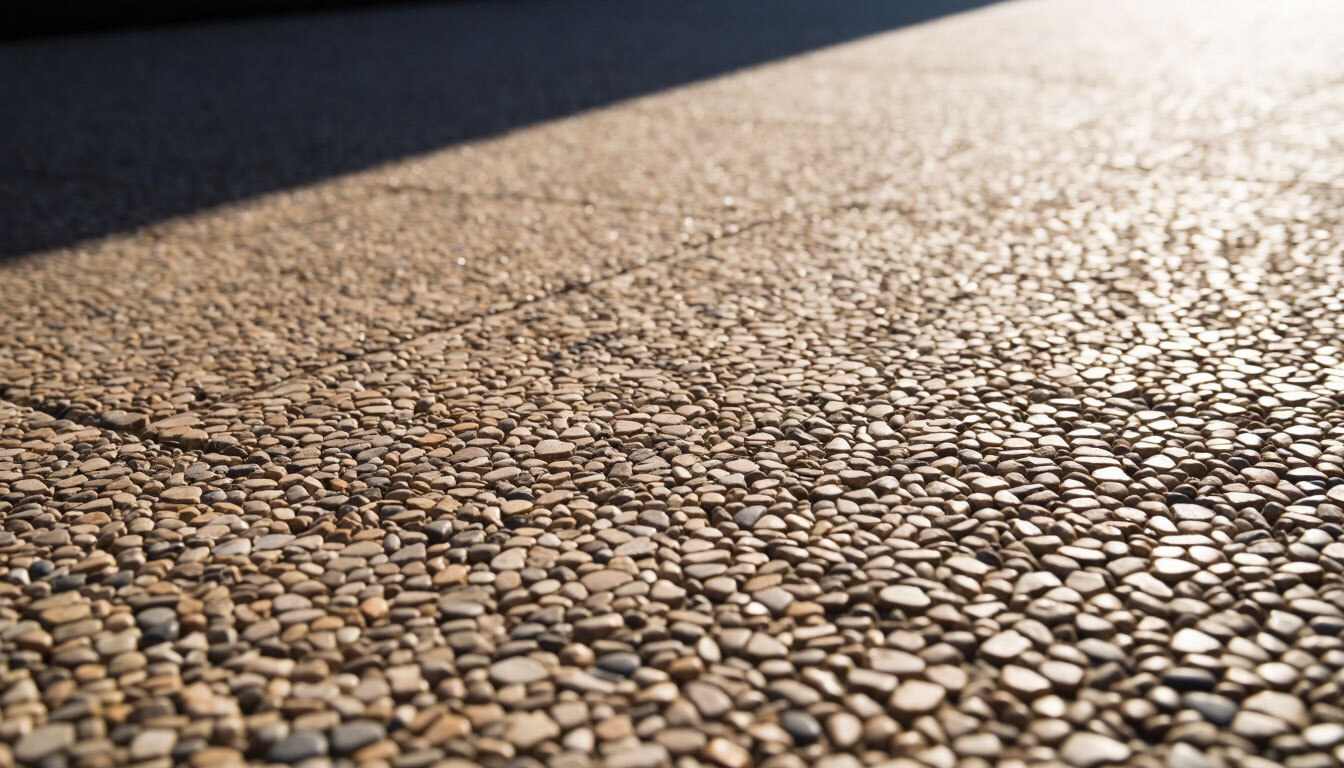
No less important for a region with rare but intense rainfall is the permeability of the surface. The porous structure of the material, formed by the point contacts of stone particles, creates an extensive network of microchannels through which water permeates unobstructed into the drainage layers of the base. This property not only prevents the formation of puddles and ice but also contributes to the natural replenishment of groundwater, aligning with the principles of sustainable development increasingly popular in the Emirates.
From an environmental safety perspective, resin bound paving demonstrates significant advantages. The material does not release volatile organic compounds after polymerization, does not overheat under the scorching sun due to the light-reflecting properties of natural stone, and can be manufactured using recycled materials. Furthermore, the absence of need for chemical reagents to control weeds (which cannot grow through the monolithic surface) further reduces the environmental impact on the surrounding ecosystem.
Functional applications in urban and private environments
The versatility of resin bound aggregate paving opens wide possibilities for its use in various types of projects. In urban infrastructure, the material is ideally suited for pedestrian zones, cycle paths, and public spaces where both durability and aesthetics are important. The seamless surface ensures comfortable movement for people with limited mobility, parents with strollers, and cyclists, eliminating vibration and the risk of wheels getting stuck in joints.
In the private sector, the application of the technology covers areas from private villas to commercial properties. Owners of residences appreciate the possibility of creating seamless transitions between interior and exterior, when the same surfacing is used both indoors and on adjacent terraces. For hospitality venues — hotels, restaurants, resorts — resin bound paving offers a solution combining premium aesthetics with minimal maintenance requirements. The surface is easy to clean, does not absorb spilled liquids, and maintains a flawless appearance under heavy pedestrian traffic.
Particularly noteworthy is the use of the material in areas with heightened safety requirements. Around swimming pools, on playgrounds, and in spa complexes, the anti-slip properties of the surface, which persist even when wet, significantly reduce the risk of injury. At the same time, the surface remains comfortable for barefoot walking and does not overheat in the sun, unlike ceramic tiles or natural stone.
Aesthetic possibilities and design potential
One of the most convincing arguments for choosing resin bound aggregate paving is the unprecedented freedom for realizing design concepts. The technology allows the creation of virtually any color solutions — from monochromatic surfaces to complex gradients and patterns. By combining aggregates of different colors, sizes, and origins, unique visual effects are achieved that are impossible with standard paving materials.
The possibility of precise color matching opens additional prospects for integrating the surface into the architectural context. The color palette of the surface can be harmoniously linked to facade solutions, landscape elements, or corporate identity. For commercial properties, this allows strengthening branding through elements of external landscaping, creating a memorable visual image.
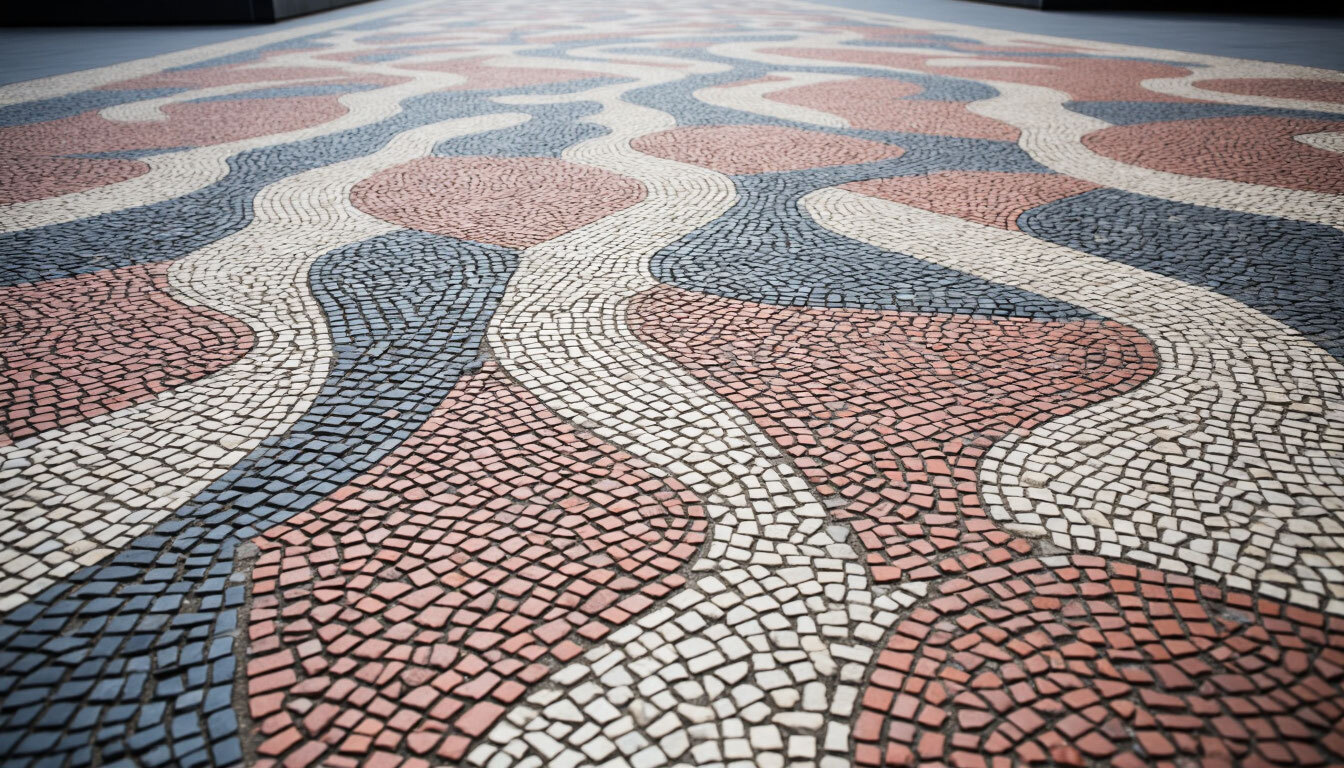
An innovative direction is the creation of thematic and artistic surfaces. Resin bound paving technology allows the reproduction of complex patterns, logos, and even paintings, transforming the surface into an art object. Such solutions are especially in demand in premium-class projects, public spaces with complex concepts, and properties where design becomes a key element of positioning.
Installation technology and ensuring longevity
The quality and longevity of resin bound aggregate paving directly depend on compliance with the technology at all stages — from design to final treatment. The process begins with a thorough assessment and preparation of the base, which must provide the necessary load-bearing capacity and drainage. Depending on the project conditions, this could be compacted soil, a crushed stone bed, or a concrete slab. Creating correct slopes for effective water drainage is critically important.
At the laying stage, special attention is paid to maintaining stable temperature conditions, as the resin polymerization is sensitive to extreme temperatures. Professional contractors use specialized equipment for mixing and distributing the material, ensuring the homogeneity of the composition and uniformity of the surface thickness. Final compaction is performed using mechanical rollers, after which the surface is protected during the initial curing period.
The guarantee of the surface's longevity is not only the quality of installation but also proper operation. Despite its high strength, resin bound paving requires periodic maintenance, which primarily involves regular cleaning of the surface from contaminants. To maintain aesthetic characteristics, specialized impregnation can be applied, enhancing the color and providing additional protection against UV radiation.
Comparative analysis of ownership cost
When assessing the economic feasibility of choosing resin bound aggregate paving, a holistic approach to cost calculation is necessary. Although the initial investment in this technology may exceed the costs of traditional materials, the long-term economics of the project look different. A significantly longer service life (with proper installation — 25+ years), minimal maintenance costs, and the absence of need for periodic repairs radically change the picture of the total cost of ownership.
An important economic aspect is the preservation and increase in property value thanks to the premium surface. Aesthetically perfect and functional territories become a significant asset, enhancing the property's appeal to potential tenants or buyers. For commercial projects, this translates into direct business benefits through improved customer experience and strengthened positioning in the premium segment.
Technology development prospects in the region
The development of resin bound aggregate paving in the UAE aligns with general trends in sustainable construction and smart city concepts. Permeable surfaces contribute to stormwater management, reducing the load on urban infrastructure. The light-reflecting properties of the material help reduce the heat island effect in the urban environment, which is particularly relevant for the densely populated cities of the Emirates.
An expected direction of development is the integration of additional functional capabilities — from photochromic additives that change color depending on lighting, to antibacterial coatings for medical institutions. Research into improving the characteristics of the material continues, opening prospects for the emergence of solutions even more adapted to the UAE climate.
Ready to consider the possibility of applying resin bound aggregate paving in your project? Our specialists can help conduct a detailed site analysis, prepare a feasibility study, and implement a solution that meets your aesthetic and functional requirements.